

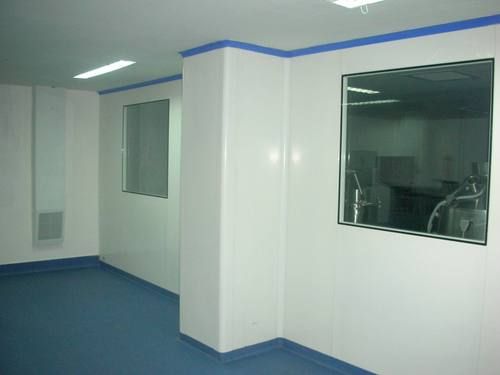
ICU Partition
Product Details:
- Usage Provides privacy and infection control in ICU environments
- Color Light Blue / White (customizable)
- Size 2000 mm (H) x 1000 mm (W) per panel (customizable)
- Thickness 32 mm panel thickness (approx.)
- Enviornment Indoor, medical facility compliant
- NRC 0.65 (approximate, aids moderate sound absorption)
- Application Hospital ICU division, nursing stations, isolation wards
- Click to View more
X
ICU Partition Product Specifications
- Hospital ICU division, nursing stations, isolation wards
- ICU Partition
- Medical/Healthcare grade
- Light Blue / White (customizable)
- 2000 mm (H) x 1000 mm (W) per panel (customizable)
- Provides privacy and infection control in ICU environments
- 0.65 (approximate, aids moderate sound absorption)
- Indoor, medical facility compliant
- 32 mm panel thickness (approx.)
ICU Partition Trade Information
- Gujarat
Product Description
Owing to our years of industry experience and rich domain-specific knowledge, we are able to offer our clients superior quality ICU Partition. Extensively used in hospitals, nursing homes, clinics and other similar places, the offered partition helps in maintaining the privacy in ICU. Designed under the strict supervision of our qualified professionals, we ensure that this ICU Partition perfectly complies with set global norms. Attributed to its features such as precise design, impeccable finish, durability and high strength, the offered partition has gained wide popularity in both, the domestic and the international market.
Purpose-Driven ICU Partition Solution
Our ICU Partition is crafted specifically for hospitals and other medical facilities, ensuring optimal privacy and infection control. The design meets rigorous healthcare standards, featuring materials that enhance both safety and cleanliness. By enabling flexible space division, medical staff can efficiently organize ICU, nursing, or isolation zones as needed.
Acoustic and Physical Protection
With an approximate NRC of 0.65, the panel structure assists in moderating noise, which is crucial for patient recovery in busy ICU environments. The 32 mm thickness not only provides a substantial physical barrier but also contributes to an overall quieter, more comfortable space for both patients and healthcare professionals.
Customizable for Any Healthcare Space
Every healthcare setting is unique, so our partitions are customizable in both color (light blue or white and more) and panel size. Whether your facility needs extended coverage for an open ward or compact division for private spaces, our solutions are adaptable to your spatial and aesthetic requirements.
FAQs of ICU Partition:
Q: How is the ICU partition installed in a hospital setting?
A: The ICU partition panels are designed for straightforward installation. They typically involve connecting the panels together with secure fixtures and stabilizing them to the floor or existing support structures, ensuring both safety and compliance with medical facility standards.Q: What makes this partition suitable for infection control and privacy?
A: The panels are constructed from medical-grade, easy-to-clean materials that support hygienic practices. They provide a physical barrier that reduces the risk of airborne transmission and visual privacy, helping healthcare professionals maintain patient dignity and safety.Q: When should medical facilities use these ICU partitions?
A: These partitions are ideal whenever increased patient privacy, infection control, and flexible space management are neededsuch as in intensive care units, isolation wards, and nursing stations during high patient volume or for special outbreak control scenarios.Q: Where can these partitions be effectively applied within a hospital?
A: They are most commonly used in ICU areas, temporary or permanent patient rooms, small treatment bays, nursing stations, and isolation wards. Their indoor medical-grade compliance suits any hospital environment that requires adaptable space division.Q: What is the process to customize the size or color of the ICU partitions?
A: Customization involves specifying your preferred panel dimensions and color options at the time of order. Our team will work closely with you to ensure the partitions match your facilitys spatial and aesthetic needs, offering light blue, white, or additional custom colors upon request.Q: How do these partitions aid in sound absorption within ICU environments?
A: With a Noise Reduction Coefficient (NRC) of approximately 0.65, the partitions help reduce noise levels by absorbing moderate sound, creating a calmer and more focused environment that benefits both patients and staff.Q: What are the key benefits of using a medical-grade ICU partition?
A: These partitions enhance infection control, provide privacy, support adaptable space management, and help create a quieter environment. Their medical-grade materials and design comply with stringent healthcare regulations, ensuring both safety and functionality in critical medical settings.Tell us about your requirement

Price:
Quantity
Select Unit
- 50
- 100
- 200
- 250
- 500
- 1000+
Additional detail
Mobile number
Email

Other Products in 'Clean Room Partition' category


AJNI INDUSTRIES PVT. LTD.
GST : 24AAFCA0991A1Z7
GST : 24AAFCA0991A1Z7
- R.S. No. 529/1, Village Asoj, Halol Express Way, Tal. Waghodia, Vadodara - 391510, Gujarat, India
- Phone : 91-265-2774855
- Phone : 91-265-2774855/2761515
- Send Inquiry
 Send Inquiry
|
 |
AJNI INDUSTRIES PVT. LTD.
All Rights Reserved.(Terms of Use) Developed and Managed by Infocom Network Private Limited. |
